CASCADE
GAUNTLET 2027
The drone threat doesn’t stop at a jurisdiction line. Neither do we.
Drones already fly over prison yards, borders, stadiums and military positions. Cascade Gauntlet puts the people who defend those places on the same range, against the same threat, under the same scoreboard.
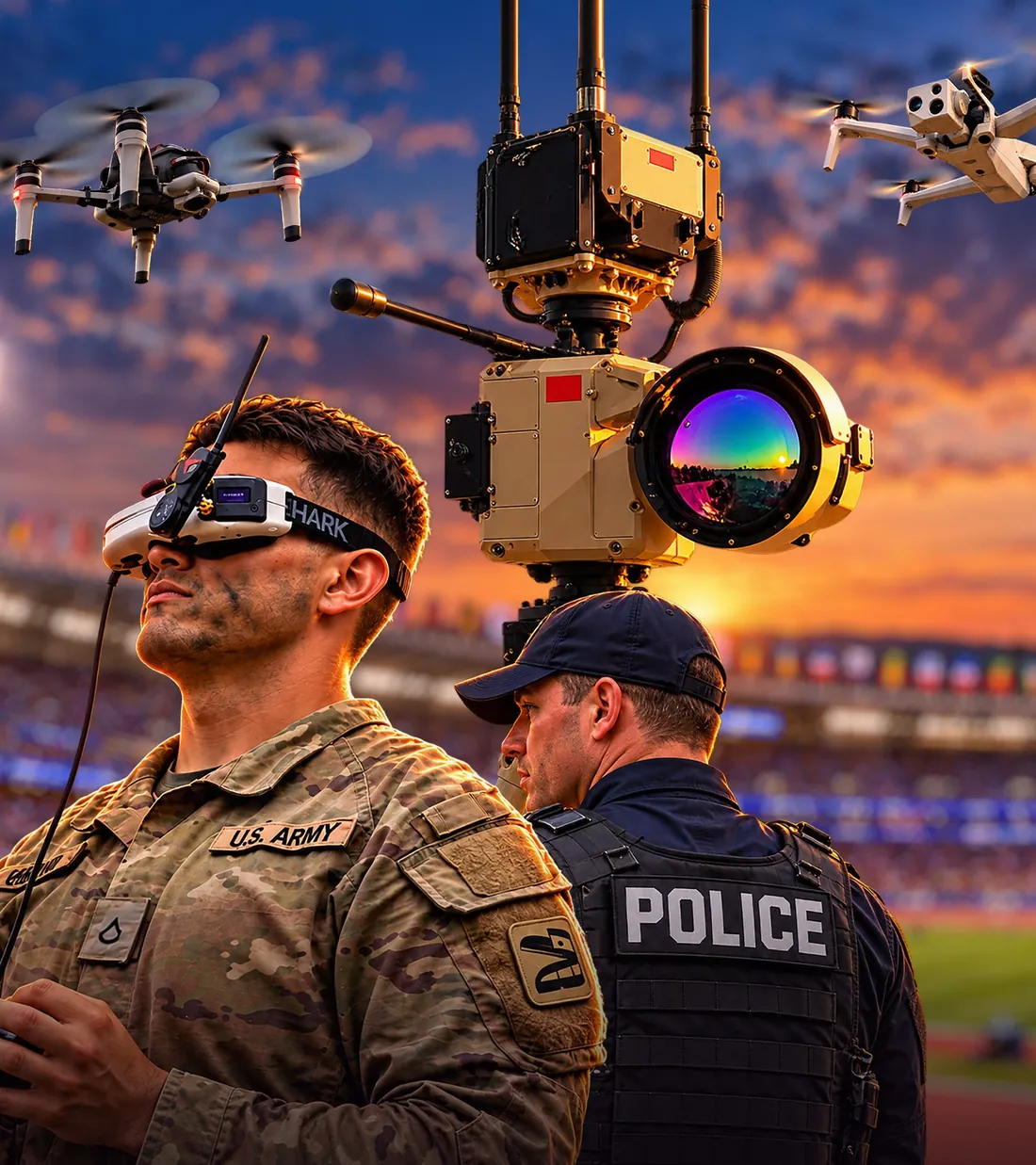
Defend together
- Law enforcement and military C-UAS teams detect, identify, decide and report against a realistic drone threat, together, across jurisdictions and borders.
- Participants collaborate, cross-pollinate and harvest best practices.
Built to be real
- Scored lanes that are the training, the validation and the competition in one pass.
- Partners write the objectives; the Guard provides the range, the threat and the structure.
- A threat that looks like what agencies and units actually face.
Leave better
- Every participant leaves having achieved their exercise objectives.
- Capability gaps and authority friction documented in a published Findings Report.
- A Cup with a name engraved on it, and a reason to come back in 2028.
The scored lanes are the exercise. Competition and validation are the same activity; all three exercise days count.
Red air flies. Blue team defends. Everybody is scored.
Every team runs all four lanes. Pilots and operators are scored against standards the partners helped write: the same objectives across a correctional yard, a border, a stadium and a military outpost, from crawl to run.
Get the drone through
See it, name it, stop it
Crawl
Aircraft, routes and locations known. Day 1 qualifying runs.
Walk
Make and model unknown; routes known. Day 2 scored rotations.
Run
Unknown, multiple, radio-quiet, and at night. Day 2 evening and Day 3.
The Yard
A correctional facility after dark. Somewhere past the tree line, a pilot is lining up a contraband drop over the wall.
Deliver the goods
The pilot plans an ingress over the wall and carries an inert payload into the yard. Every second the aircraft flies before the defenders declare it is a second on the pilot’s side of the ledger.
Make the call
Over a prison yard the hard question isn’t whether you can stop the drone; it’s whether you’re allowed to. The team works from its authority card and decides: engage, hand off, or monitor.
Two scoreboards, one sortie
The same run scores both sides. The pilot earns points for every second unseen; the operators earn them for every second gained, and for a call that holds up.
The Line
A border segment with patrol roads, broken ground and tunnels. A drone runs ISR on the patrols while its pilot stays out of sight.
Hide the hand
Shooting down drones is a losing trade. The pilot is the target, so the pilot fights to stay invisible: concealed launch site, smart standoff, and a move before the net closes.
Find the pilot
Sensors take bearings on the control link and the track. Lines cross, the search area collapses, and the location goes to the interdiction team on the ground.
A race against the clock
Five minutes decides it. Hands on the pilot in under two earns the Hunter bounty. A pilot who relocates before the team arrives starts the hunt all over again.
The Venue
A packed stadium. A media drone works the field, hobby drones buzz outside the gates, and one of them doesn’t belong.
Evade & deceive
The threat hides in the noise: it flies like the media drone, uses the terrain and the crowd, and changes its profile when it thinks it’s being watched.
Know what it is
Above a crowd, a wrong call is worse than a slow one. Operators hold every track, classify each aircraft and match its intent, without ever declaring a friendly hostile.
Find the one that doesn’t belong
Four tracks, one threat. The pilot wins time by blending in; the operators win by sorting the sky correctly and fast, and keeping the Clean sheet.
The Outpost
A military position in open country. First a spotter finds it. Then the strike arrives, from every direction at once.
Coordinated raid
A recon drone fixes the target and calls in a multi-ship strike. Two to four aircraft arrive from different bearings, timed to overwhelm a single defender.
Pass it on
No single team stops a raid alone. The outpost reports what it sees in seconds, so the next unit, agency or nation can act on it.
Saturation versus the network
The raid wins if it arrives together and unreported. The defense wins if every inbound is on the network before it arrives. The best cross-agency handoff takes the Handshake bounty.
Three titles. Four bounties. One Cup.
The Cascade Gauntlet Cup is a real trophy, won on aggregate across all four lanes and all three days, and defended every year. Safety gates override every score: a safety violation zeroes the sortie.
Top Pilot
Top Operator
Top Team
Ghost
Mission effect achieved, never declared.
Hunter
Hands on the pilot in under two minutes.
Clean sheet
A full day with no false calls.
Handshake
The best cross-agency handoff.
The Cascade Gauntlet Cup
Aggregate organization score across all lanes and all three days. One trophy. One name engraved on it. Come take it, or come back in 2028 to defend it.
Scoring weights shown are the current proposal; final rules and rubric are published before the exercise and don’t change after that.
One gauntlet. Two events.
Cascade Gauntlet is the umbrella over two events that share the range, the threat and the scoreboard.
Rainier Shield 27
Protecting communities and venues. For local police and sheriffs, corrections, tribal law enforcement, federal agencies, fusion centers and emergency management, alongside Guard and U.S. military units.

Pacific Talon 27
Interoperability with allies. International partners join through the National Guard State Partnership Program: shared tactics, shared lessons, one threat picture.
Your team.
Real drones.
One Cup.
Planning is underway now, and partners shape the objectives they’ll be scored on. Agencies, units and partner nations who want a lane on the range: email us for details and an invitation to the planning conferences.